Spoilers: Mid game
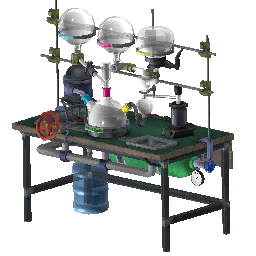
How to Use the Chemistry Bench
Use the three input flasks and mixing valve in Abiotic Factor, check doses, and diagnose why a mix does not produce the expected concoction.
What is the Chemistry Bench construction recipe?
Build one Chemistry Bench with 4 Metal Pipe, 4 Quantum Glass, 6 Reinforced Wooden Plank and 3 Lab Burner at a standard Crafting Bench. These construction materials do not go into its three reagent flasks.
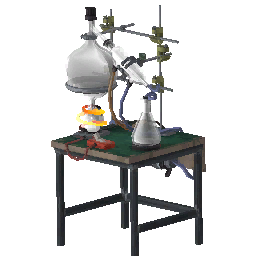
If you have not built the first-stage station, check the Distillation Bench recipe. The two benches have different material costs and different jobs.
Shopping list if you need both chemistry stations
One Distillation Bench plus one Chemistry Bench requires 8 Metal Pipes, 6 Quantum Glass, 8 Reinforced Wooden Planks and 4 Lab Burners at the finished-component level. Do not count the burner parts as already included in those eight pipes.
| Missing component | Recipe for one at a Crafting Bench |
|---|---|
| Quantum Glass | 1 Anteverse Gem + 4 Glass Scrap |
| Reinforced Wooden Plank | 2 Wood Planks + 1 Rebar |
| Lab Burner | 1 Refined Carbon + 1 Reinforced Hose + 1 Metal Pipe + 1 Metal Scrap |
If making all four burners rather than taking them from inventory, budget four extra Metal Pipes beyond the stations’ direct requirement. The Manufacturing material guide includes the Reinforced Hose recipe. You do not need to dismantle an existing station to build the other one.
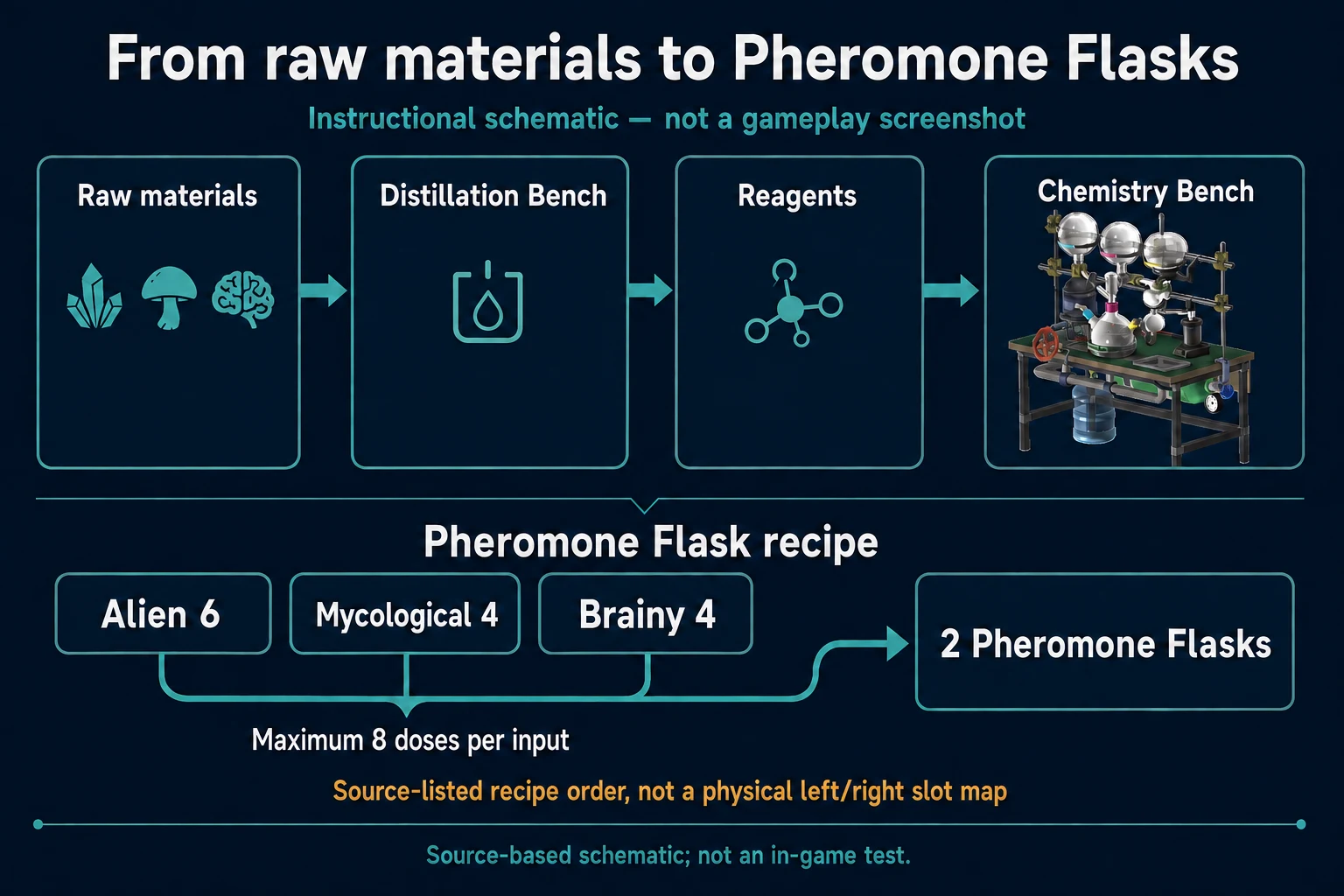
Worked batch: make two Pheromone Flasks
| Recipe input | Distillation | Doses |
|---|---|---|
| Ingredient 1 | Alien | 6 |
| Ingredient 2 | Mycological | 4 |
| Ingredient 3 | Brainy | 4 |
- Obtain the three named reagents, using the input/yield guide if you only have raw materials.
- Check the contents of each input flask before adding anything. Do not assume a partly used bench is empty.
- Load the recipe in the table above without changing its arrangement, then compare all three amounts again.
- Operate the red valve and inspect progress at the output flask.
- This mix takes 15 seconds. Collect and check the result: two Pheromone Flasks. Only then plan another batch.
For a from-scratch reagent batch, the distillation yields give one workable shopping list: 6 Raw Pest + 1 Carbuncle Mushroom + 1 Human Brain. Distill the raw inputs first, then measure 6 Alien, 4 Mycological and 4 Brainy doses at this bench. Existing reagent stock can replace the corresponding raw inputs.
Each input holds at most eight doses. Doubling this recipe in one load would require twelve Alien doses, exceeding that limit. Repeat a valid batch instead of overfilling one input and accidentally changing the ratio.
Why is the mixture wrong even when the reagent names match?
Check remaining contents, quantities and arrangement separately. Loading four doses where a recipe calls for six is not the same mixture. Reagent capacity is a limit, not a recommendation to fill every flask completely.
Keep the displayed recipe arrangement for your first batch. If the result is wrong, check each reagent and dose before retrying; do not use a large batch to experiment with different arrangements.
Once your flasks are ready, choose Pest taming or Mushroom Peccary taming. Pack the correct food before throwing a flask: pacification and completed taming are not the same state.
Before turning the valve
Confirm that you are holding distillations, not the raw items used to make them. Raw materials belong at the Distillation Bench.
Check each input against the recipe you are following. The name of a reagent and its quantity both matter. Keep the same arrangement while troubleshooting so that you change only one variable at a time.
When a result is unexpected
Do not immediately repeat the same large batch. Record the three inputs, their amounts, and the output. Then compare those details with the worked batch above.
A capacity of eight per flask does not mean eight is the correct amount for every recipe. It is the limit of a container, not a universal formula.
Choose the right output family
The system produces coatings, flasks, and tinctures. The chemistry overview explains their intended roles.